I don't need to give you a rebuttal; you need to prove your claims.seanality wrote:Don't tell me it doesn't matter.
Your argument makes sense but at the same time there are some flaws. For instance it does matter how often you eat, you can't just pound 3,000 calories in 1 meal and have that be the same as 6 500 calorie meals throughout a day. That just doesn't make sense to me. Your body can only use so many calories within a time frame. Your muscle don't just rebuild as soon as you get that food in, they are constantly rebuilding and therefore they constantly need nutrition.
Don't give me a page worth for your rebuttal, just give me a few sentences.
Simply put, nutrition timing matters under two circumstances:
1) When someone is performing multiple glycogen-depleting workouts in a single day.
2) When training after 48-72 hours of fasting.
This graph:
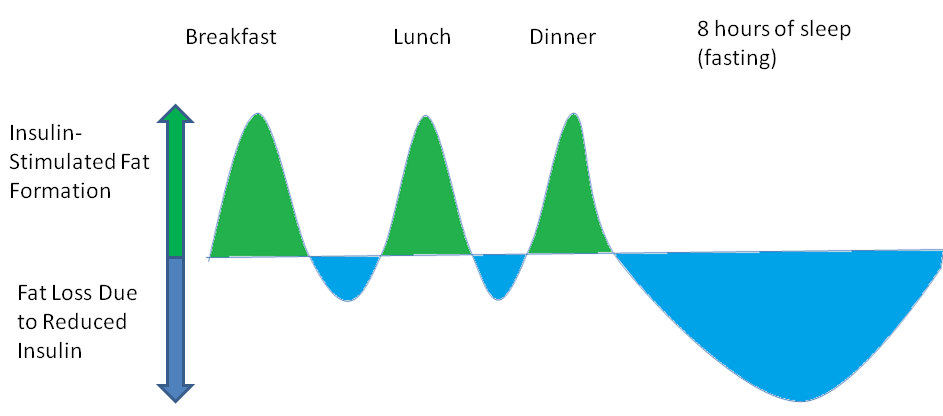
Learn it, live it, love it. What matters is the net peaks or net valleys above/below the baseline, NOT the number of times there is a peak or a valley. The NET number is what matters. Meal frequency, meal timing, means nothing. I eat 2 meals per day every day. On days I don't workout, I'll often eat a single meal in a 24 hour period.
That graph is relevant to muscle loss/building, too. Muscle loss/gain along with fat loss/gain is a process that happens every minute of every day. Right now you are gaining or losing muscle. After eating you will gain fat and muscle. After long periods of fasting you are losing fat and muscle. That's how it works. What determines whether you lose fat or gain muscle is what your entire diet looks like over a long period of time, NOT what your diet looks like in a 2-3 hour time period.